

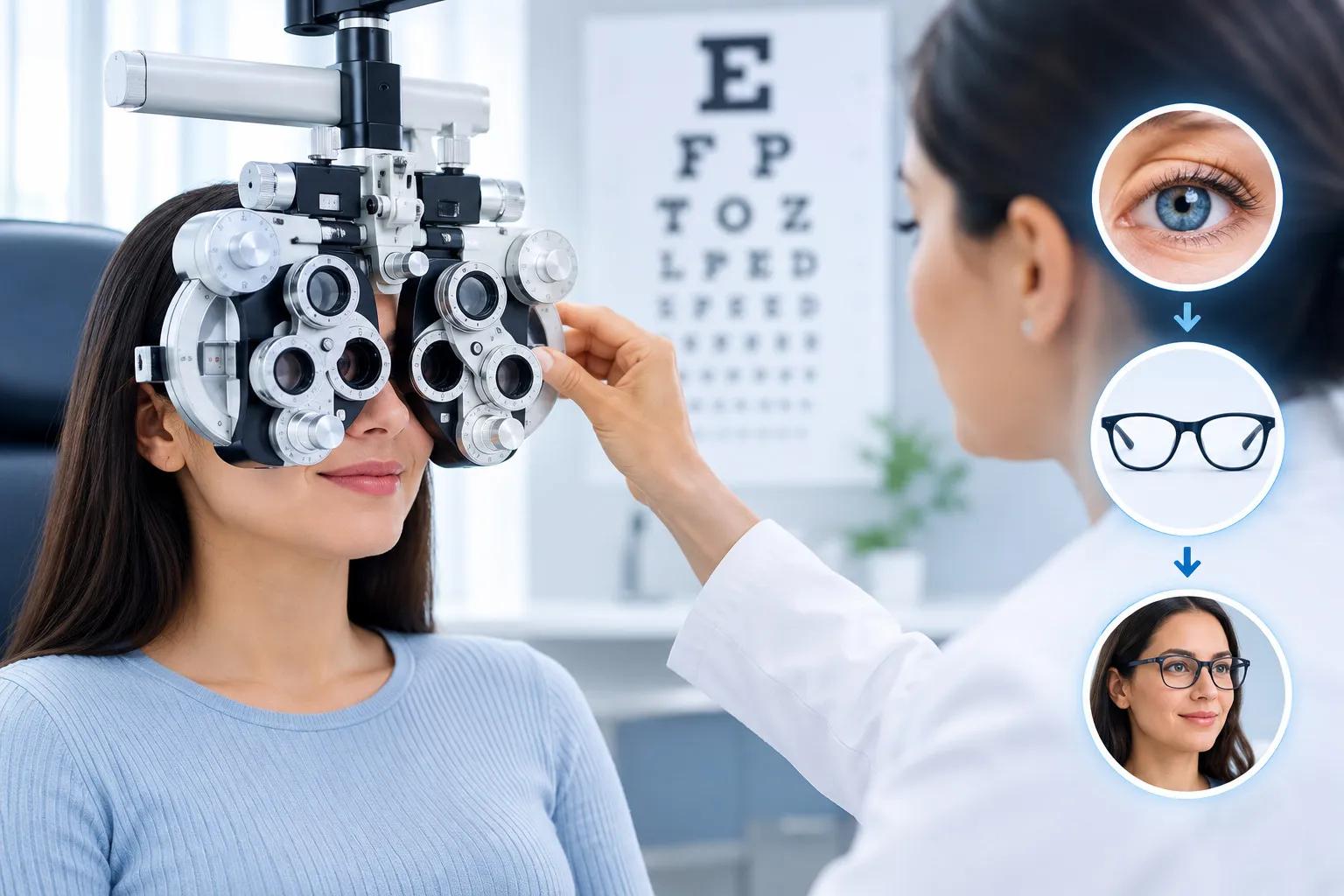
Prescription glasses can transform your day-to-day life by improving your vision when they match your eyes. However, if the prescription isn't quite right, you may not get those benefits. Vision can change over time, and people often don't realise their current glasses aren't providing the correction they need. Getting your eyes tested before buying a new frame or lenses helps you understand exactly what your eyes need. Looking up "eye testing near me" can be the first step towards an up-to-date prescription and better choices when it comes to glasses. Accurate testing can also assess your eye health, not just how clearly you see.
How to understand the purpose of an eye test
An eye test isn't simply about reading letters on a chart. Examiners can perform various tests during an examination to assess vision and determine whether corrective lenses are needed. Refractive errors like nearsightedness (myopia), farsightedness (hyperopia), and astigmatism commonly reduce vision clarity, and each relates to how the eyes focus light. Tests may also evaluate how each eye focuses and whether they work together properly. These measurements help determine the prescription needed for clear, comfortable vision.
Small differences in prescription strength can impact activities like driving, reading, working on computers, or performing other close-up tasks. Regular eye exams also allow professionals to monitor changes to eyes over time. In some cases, further testing may be recommended based on the patient’s circumstances and type of exam they receive.
Importance of getting the right prescription
Glasses require specific measurements to create lenses that provide adequate vision correction. Prescription lenses based on inaccurate measurements may not meet the wearer’s current needs. People with the wrong prescription may find everyday tasks more visually challenging than they need to be. Blurred vision, eye strain, headaches, and difficulty shifting focus between distances are common with an unsuitable prescription. However, these symptoms can have multiple causes. An eye care professional can help determine if vision needs have changed by performing an updated evaluation.
Accurate testing can also minimise uncertainty when ordering glasses. Patients can begin selecting lenses once they have professional information about their vision needs. Starting with an outdated prescription or guessing about whether vision has changed can lead to poor choices.
Changes to eyesight can occur over time
Not everyone has perfect vision throughout life. Eyes can change as children grow and age, and lifestyle choices can affect eyesight in adulthood. Even healthy individuals who spend a lot of time reading or working on computers may require vision correction.
Someone who has had the same prescription for years might think they know when their glasses stop working well. However, subtle changes can be difficult to detect. People may unconsciously adapt by holding reading material closer or enlarging text on computer screens. They might squint more often to see distant objects clearly. Regular eye tests can help identify these changes and advise whether you need an updated prescription.
Vision testing can influence lens choices
Prescription glasses serve different purposes. While some patients only need glasses for distance vision, others need them for close-up work. Some individuals benefit from lenses that accommodate multiple distances.
By accurately assessing vision, eye care professionals can better understand how the prescription relates to daily tasks. A person’s hobbies, work environment, and overall lifestyle help identify suitable prescription lenses. Discussing these topics with an optometrist can provide additional insight into how you'll use your glasses. This helps professionals ensure the prescribed lenses and any recommended options suit daily tasks.
Getting the proper measurements
Along with getting the right prescription, proper measurements ensure glasses work well for the wearer. The distance between each lens and the pupils can impact vision clarity, especially with certain prescriptions and lens types.
Pupillary distance helps determine each lens's optical centre. Frame-specific measurements may be required for other aspects of fitting. Accurate measurements can help you see comfortably in new glasses and may adjust more easily.
Finding the right pair of glasses
With the right prescription, choosing glasses is easier. Frame fit and comfort, lens material, lens design, coatings, and budget also matter, along with the eye doctor’s prescription. Even if prescription glasses look stylish, no one should have to compromise on corrective accuracy.
Starting with accurate testing helps ensure you find lenses that meet your visual needs. Keeping copies of prior prescriptions and sticking to recommended exam schedules can simplify the process even further.
Accurate eye exams provide the information needed to choose glasses that will work well for the wearer. Testing can reveal changes to eyesight and help establish the proper prescription. Regular appointments also offer a chance to have your eyes checked for other common conditions that may not affect vision clarity.
Whether visiting an optical store or browsing for cheap prescription glasses in Australia, patients should never underestimate the importance of an up-to-date prescription. Style and price will always factor into the purchasing decision, but neither should affect vision correction. Taking the time to keep eyes examined makes it easier to understand vision changes and choose glasses wisely.